


What Is a Carotenoid Score? Eye Health, Nutrition, and Lutein
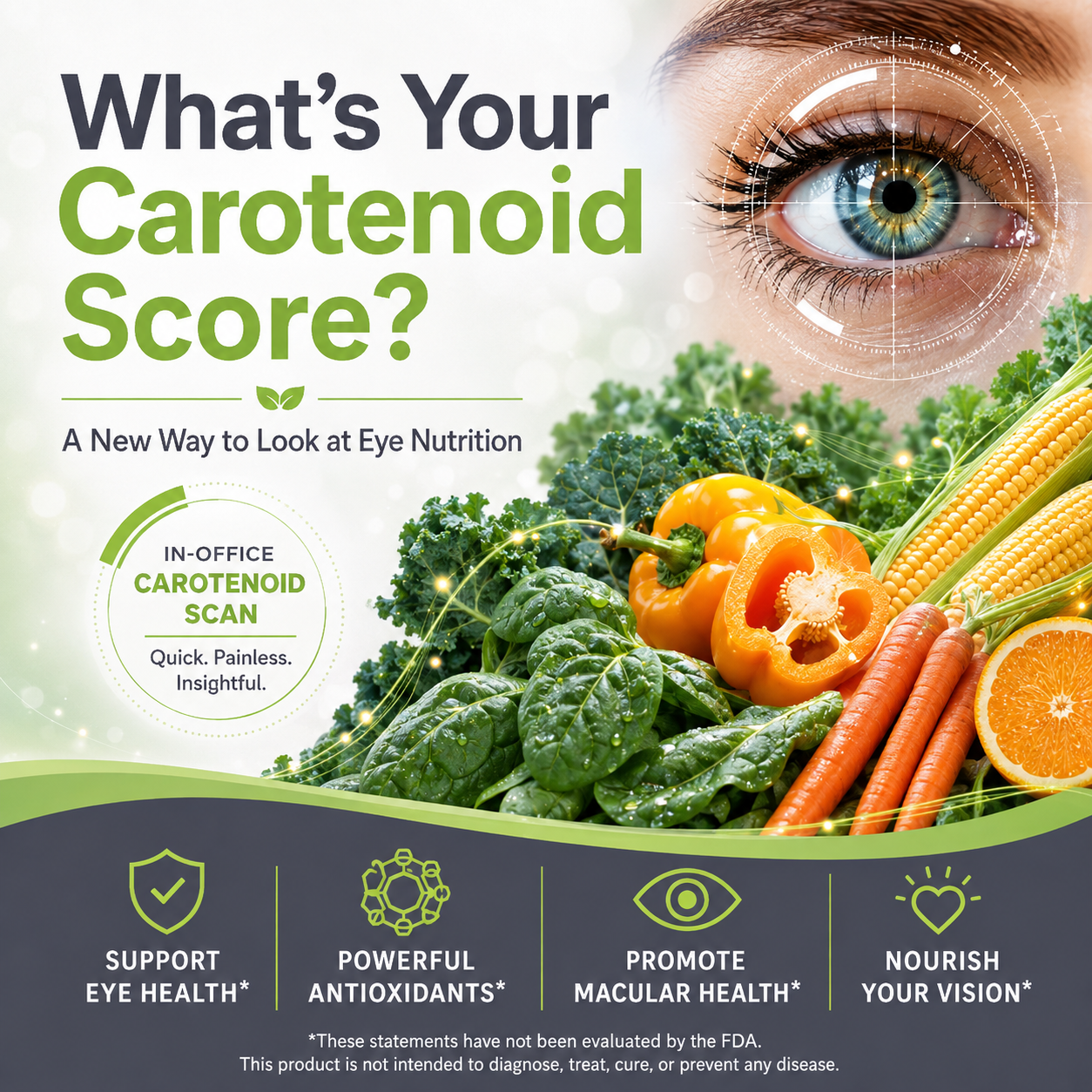
A New Way to Look at Nutrition, Antioxidants, and Long-Term Eye Health
When most people think about eye health, they think about glasses, contact lenses, eye pressure, or needing a stronger prescription. But healthy vision is also connected to something many people do not think about every day: nutrition.
That is where carotenoids come in.
Carotenoids are natural pigments found in colorful fruits and vegetables. They help give foods such as spinach, kale, carrots, peppers, corn, and other brightly colored produce their rich colors. Some carotenoids also act as antioxidants, helping support the body’s natural defenses against oxidative stress.
For eye health, two of the most important carotenoids are lutein and zeaxanthin. These nutrients are found in the retina and are especially concentrated in the macula, the part of the eye responsible for sharp, detailed central vision. Your macula helps you read, recognize faces, see fine detail, and notice contrast
In simple terms: your macula is tiny, but it does a big job.
Why Do Carotenoids Matter for Eye Health?
Your eyes are constantly exposed to light, oxygen, and daily environmental stress. Over time, that stress may contribute to changes in the eye, particularly in the retina and macula
Carotenoids such as lutein and zeaxanthin help support the eye’s natural defense system by acting as antioxidants and helping filter certain high-energy light before it reaches sensitive retinal tissue
This does not mean carotenoids cure eye disease, and nutrition does not replace regular eye exams. However, nutrition can be an important part of a long-term eye wellness plan.
Think of carotenoids as part of your eyes’ internal support system. Just as sunscreen helps protect your skin from the outside, healthy nutrients help support your eyes from the inside.
What Is a Carotenoid Score?
A carotenoid score is a measurable indicator of the carotenoid levels in your body. It can provide a starting point for discussing nutrition, lifestyle habits, and long-term eye wellness.
A carotenoid score is not a diagnosis. It does not replace a comprehensive eye exam, retinal evaluation, or medical testing. Instead, it offers another helpful piece of information when discussing how your daily habits may support your vision and overall health.
For many patients, having a score makes eye nutrition easier to understand because it turns an abstract idea into something measurable and trackable.
Introducing Our New In-Office Carotenoid Scanner
We are excited to offer in-office carotenoid scanning
This quick, non-invasive scan gives us a measurable look at your carotenoid levels. Instead of simply saying, “Eat more leafy greens,” we can help you understand where your level is today and use that information as a starting point for a more personalized conversation about nutrition, lifestyle, and eye wellness.
The scan is simple, fast, and painless. It provides a score that reflects your carotenoid status, which can be tracked over time.
Your carotenoid score is not a diagnosis, and it does not replace your regular eye care. It is simply another tool that may help you better understand how your daily habits support your long-term eye health.
What Can Affect Your Carotenoid Score?
Carotenoid levels may be influenced by several factors, including diet, supplement use, lifestyle habits, and overall consistency
People who regularly eat carotenoid-rich foods may develop stronger levels over time. These foods often include:
- Spinach
- Kale
- Collard greens
- Broccoli
- Green peas
- Corn
- Orange peppers
- Carrots
- Sweet potatoes
- Egg yolks
- Colorful fruits and vegetables
Healthy fats may also help the body absorb carotenoids more effectively. Pairing vegetables with foods such as olive oil, avocado, eggs, nuts, or other healthy fat sources may support carotenoid absorption.
Lifestyle habits matter too. Smoking, poor diet quality, limited fruit and vegetable intake, and inconsistent nutrition habits may affect antioxidant levels in the body. The goal is not perfection. The goal is awareness.
Can You Improve Your Carotenoid Score?
In many cases, carotenoid levels may improve with consistent nutrition changes over time. This may include eating more carotenoid-rich foods, improving overall diet quality, and discussing whether a carotenoid-containing supplement is appropriate for you.
Supplements are not one-size-fits-all. Some patients may benefit from specific eye-health supplements, while others may simply need to improve their dietary habits. Patients with certain eye conditions, medical histories, or risk factors should always ask their eye doctor before starting a new supplement.
This is especially important with formulas designed for age-related macular degeneration. AREDS2 supplements, for example, are intended for specific patients with certain stages or risks of AMD. They are not automatically recommended for everyone.
That is why your carotenoid score is best used as a conversation starter. It helps us discuss where you are now, what your goals are, and what steps may make sense for your eyes and overall wellness.
Why Carotenoids Matter for Healthy Aging
As we age, it becomes increasingly important to protect and support the parts of the eye responsible for clear, detailed vision. Many people notice changes such as increased glare, reduced contrast, difficulty driving at night, or needing brighter lighting to read.
Not all of these changes are caused by the same thing. Some may be related to normal aging, dry eye, cataracts, prescription changes, or retinal health. That is why comprehensive eye exams remain essential.
Carotenoid scanning gives us another way to discuss prevention and wellness. It helps connect the dots between what you eat, how you live, and how you support your eyes over time.
Good vision care is not just about seeing clearly today. It is also about protecting the quality of your vision for the future.
What Happens During a Carotenoid Scan?
A carotenoid scan is quick and easy. During your visit, we will measure your carotenoid level and review your score with you. From there, we can discuss what the result may mean, how nutrition plays a role in eye health, and whether any lifestyle or supplement changes may be worth considering.
The process is simple:
- Get your carotenoid score.
- Learn what the score means.
- Discuss nutrition and eye wellness.
- Create a plan to support healthier levels.
- Recheck your score over time to track progress.
For many patients, seeing a number makes healthy habits more motivating. It provides a baseline and a way to follow your progress.
The Bottom Line
Carotenoids are important nutrients that help support long-term eye health, especially in the retina and macula. They are found in many colorful fruits and vegetables and play a role in the eye’s natural antioxidant defense system.
Our in-office carotenoid scanner provides a quick, non-invasive way to measure your carotenoid level and begin a meaningful conversation about nutrition, lifestyle, and eye wellness.
Your score is not a diagnosis, and it does not replace your regular eye exam. However, it may help you better understand how your daily habits support your vision health from the inside out.
Curious about your carotenoid score? Ask us about our in-office carotenoid scan at your next visit.
Want to learn more about your carotenoid level and how nutrition may support your eye health? Contact our office or ask about an in-office carotenoid scan during your next appointment.
Quick Links

All Eye
Care Services

Keep
In Touch
MAP
© 2026 InFocus Family Eyecare. All Rights Reserved. Accessibility Statement - Privacy Policy - Sitemap
Powered by: 