


Why Eye Dilation Matters | InFocus Family Eyecare
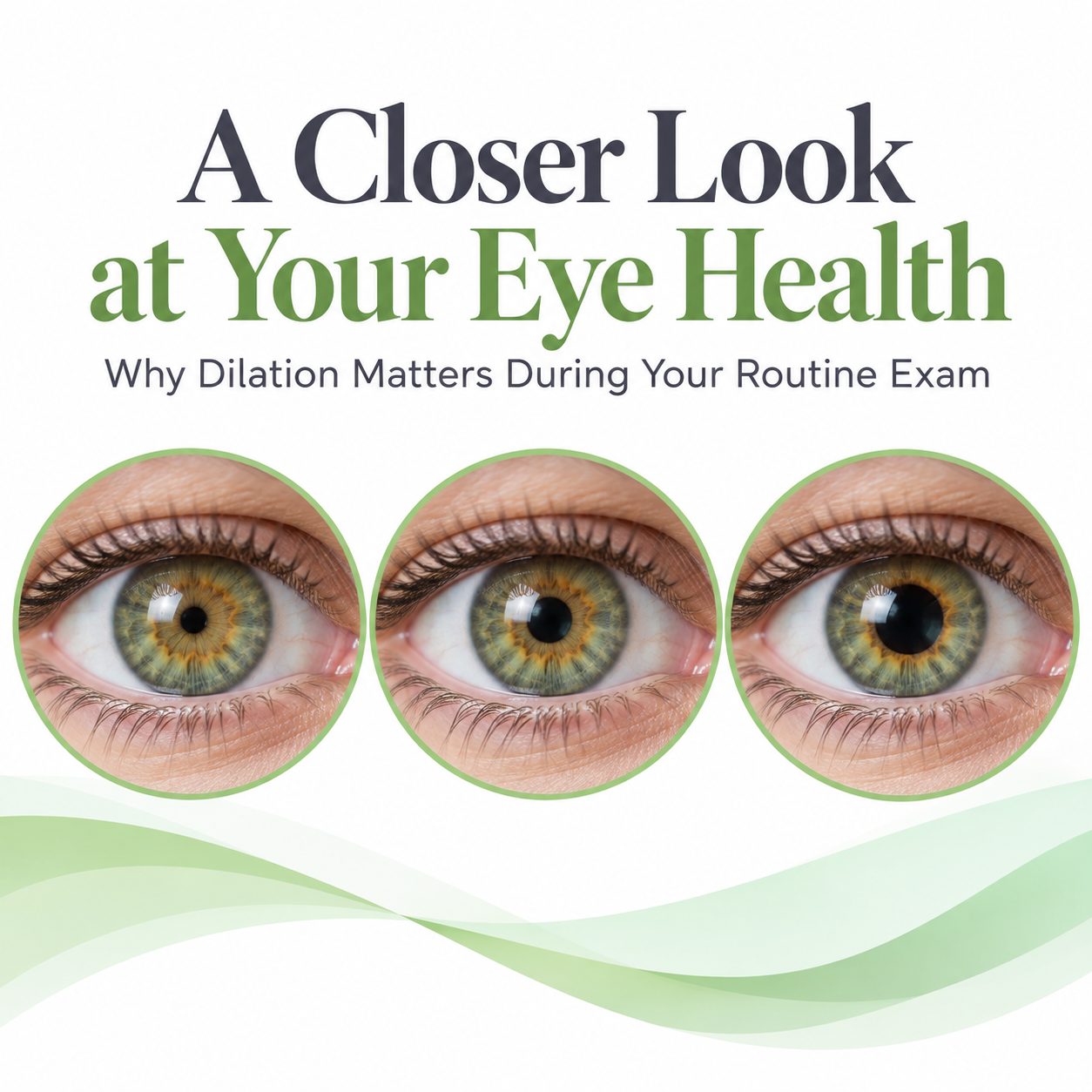
A Closer Look at Your Eye Health
Why Dilation Matters During Your Routine Exam
Pupil dilation is an important part of a comprehensive eye examination. It gives your doctor a clearer view of the structures inside your eyes, helping identify changes that may not yet affect your vision. This makes dilation valuable even when you see clearly and your glasses prescription remains stable.
Although dilation can cause temporary light sensitivity and blurred near vision, it provides information that a vision test alone cannot. Understanding its purpose and what to expect afterward can help you plan for your appointment, including whether dilation reversal drops may be appropriate for you.
How Pupil Dilation Works
The pupil is the opening at the center of the iris, the colored part of your eye. It normally becomes smaller in bright light and larger in dim light. During an examination, dilating drops act on the muscles that control pupil size, allowing the pupil to remain open while your doctor examines the eye.
This improves the view of the retina, the light-sensitive tissue at the back of the eye, and the optic nerve, which carries visual information to the brain. It also allows careful examination of the macula, the central portion of the retina responsible for sharp, detailed vision.
Why Dilation Matters When Your Vision Seems Normal
Several eye conditions can develop without pain, obvious symptoms, or an immediate change in vision. Early glaucoma, diabetic retinopathy, and macular degeneration may be present before a patient notices anything unusual.
A dilated examination helps your doctor identify these changes and determine whether they require monitoring, additional testing, or treatment. Early detection can help your doctor begin monitoring or treatment before significant vision loss occurs. This is why an assessment of eye health remains important even when your prescription has not changed.
Conditions a Dilated Examination Can Help Detect
Dilation supports the evaluation of several conditions that can affect long-term eye health, including:
- Glaucoma. This group of diseases damages the optic nerve and can gradually affect peripheral vision. Dilation allows your doctor to assess the nerve as part of an evaluation that may also include eye pressure measurements and visual field testing.
- Diabetic retinopathy. Diabetes can damage blood vessels in the retina, leading to leakage, bleeding, or other changes. A dilated examination can reveal these findings before noticeable vision problems develop.
- Age-related macular degeneration. Changes in the macula can eventually affect central vision used for reading and recognizing faces. Examining this area helps your doctor identify early signs and recommend appropriate follow-up.
- Retinal tears or detachment. A dilated examination helps your doctor identify retinal tears or areas where the retina has separated from its normal position. Prompt evaluation and treatment can help reduce the risk of permanent vision loss.
What To Expect During Your Examination
Your care team administers dilating drops, which typically take about 20 to 30 minutes to reach their full effect. A brief stinging sensation may occur when the drops are applied, but it usually resolves quickly. Let your doctor know if you have had a previous reaction to these drops.
Once your pupils are dilated, your doctor uses specialized lights and lenses to examine the internal structures of your eyes. You may be asked to look in different directions to allow a more complete assessment. The examination is generally painless, although the light can feel bright.
Temporary Changes in Vision After Dilation
Light sensitivity and blurred near vision are common after dilation. Larger pupils allow more light to enter the eyes, and some dilating drops also temporarily relax the focusing muscles. Reading, using a phone, or working at a computer may be more difficult until these effects diminish.
These effects commonly improve within four to six hours, although the duration depends on the drops used and your individual response. Some patients remain dilated longer. Your care team can explain the expected recovery period for your examination.
Bring sunglasses to reduce glare, and allow some flexibility in your schedule for activities that require clear near vision. If neccesarry, arrange for someone to drive you home, and avoid driving while your vision is blurred or light sensitivity interferes with seeing safely.
Dilation Reversal Drops Can Shorten Recovery
Prescription drops are available to help reverse dilation after your examination is complete. RYZUMVI is an FDA-approved option that helps pupils return toward their usual size more quickly following dilation with commonly used examination drops.
Its effect generally begins about 30 minutes after administration, with the greatest effect around 60 to 90 minutes. By shortening the time pupils remain enlarged, reversal drops can make the recovery period more manageable. The response varies, and visual recovery may take additional time.
If you are concerned about how dilation may affect the rest of your day, ask our team about reversal drops. Your doctor can determine whether they are suitable based on your eye health and the drops used during the examination. Even with reversal drops, wait until your vision is clear before driving.
How Often Dilation is Recommended
The recommended frequency depends on your age, medical and eye history, family history, symptoms, and examination findings. Patients with diabetes commonly need a comprehensive dilated eye examination at least annually. Certain conditions or risk factors may require more frequent evaluation.
New symptoms can also make dilation necessary between routine visits. A sudden increase in floaters, flashes of light, or a shadow or curtain across your vision requires urgent assessment. Contact an eye doctor or seek emergency care immediately if these symptoms occur.
The Role of Retinal Imaging
Retinal photographs and scans provide valuable information and can help document changes over time. These technologies can complement a dilated examination, but they do not automatically replace it. The appropriate approach depends on the type of imaging, your symptoms, and the areas your doctor needs to evaluate. Your doctor will explain whether imaging, dilation, or both are recommended.
Understanding Your Eye Care
At InFocus Family Eyecare, we encourage patients to ask questions about their examination and recommendations. Dilation helps us assess the health of your eyes more thoroughly and identify changes that may otherwise go unnoticed. If you have concerns about dilation or its recovery period, our team can explain your options and help you prepare for your visit.
Quick Links

All Eye
Care Services

Keep
In Touch
MAP
© 2026 InFocus Family Eyecare. All Rights Reserved. Accessibility Statement - Privacy Policy - Sitemap
Powered by: 